Damn dude, when I am getting 180g a day, I feel AMAZING.
Without it, I start to collapse. Drinking, carbs, etc.
This is it. I got it. 180g protein and fiber.
Damn dude, when I am getting 180g a day, I feel AMAZING.
Without it, I start to collapse. Drinking, carbs, etc.
This is it. I got it. 180g protein and fiber.

Objective:
Lower inflammation. Reset dopamine. Restore sleep. Rebuild discipline momentum.
No heroics. No ego lifting. No chaos.
Theme: Calm the system.
Morning
Food
Eat like a professional athlete.
Midday
Evening
You are lowering cortisol.
Theme: Control returns.
Morning
Nutrition
This is earned dopamine territory.
Mind
You ran a marathon from the couch in 2024. That’s evidence.
Theme: I am the guy who trains.
Morning
Weekly Planning
Write:
Remove decision fatigue.
Sunday 8pm → Monday 8pm Fast (your standard weekly fast)
That’s discipline ritual.
Trust is built in 72 hours.
This is a different level. This is a phase transition.
Same as above.
Add:
Environment = psychology.
Daily
Macros:
Body starts leaning out visibly.
This is where you shift identity.
Daily Structure
Add:
Not goals.
Identity.
Example:
I am disciplined even when tired.
I don’t negotiate with cravings.
I train daily.
I eat like an athlete.
My body is a luxury item that cannot be bought.
Your fear is not weight.
It’s that you don’t trust yourself.
So resets are not about calories.
They are about:
Momentum > intensity.
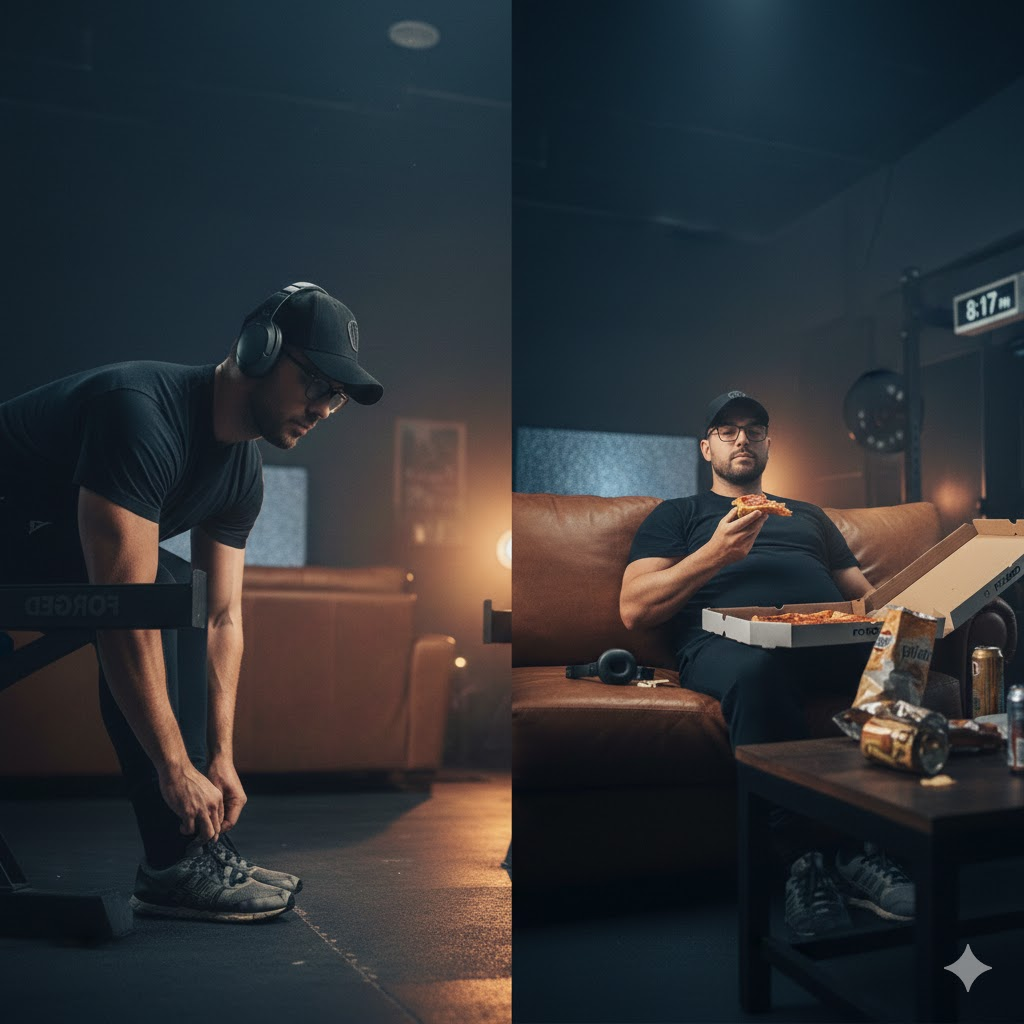
At 8:17 PM, the war starts.
The workday is over.
The brain is fried.
The pressure hums like static.
And gravity pulls.
Not just toward pizza.
Toward the couch.
That’s the real enemy.
It’s easy to blame food.
Pizza is obvious.
Beer is measurable.
Calories can be counted.
But stagnation?
That’s invisible.
You can overeat slightly and still recover.
But when you sit down and don’t train?
You reinforce something dangerous.
“I’ll start tomorrow.”
That sentence builds nothing.
Borrowed dopamine isn’t just junk food.
It’s avoidance.
It’s scrolling.
It’s letting autoplay make decisions for you.
It’s negotiating with weakness.
It feels like relief.
It’s erosion.
There is another version of 8:17 PM.
Shoes on.
Door open.
Thirty minutes moving.
Thirty minutes under iron.
No motivation.
No hype.
No cinematic soundtrack.
Just reps.
Earned dopamine is quiet.
But it compounds.
The workout is not about calories.
It’s about identity.
Every time you train, you cast a vote:
“I am not the man who negotiates.”
Every time you sink into the couch and delay?
You cast the opposite vote.
You can buy status.
You can buy luxury.
You can buy comfort.
You cannot buy discipline.
You cannot buy endurance.
You cannot buy self-trust.
That is forged.
At 8:17 PM.
There are two versions of a man.
One runs toward discomfort.
The other negotiates with it.
The difference between them is not talent.
Not intelligence.
Not opportunity.
It’s dopamine.
He knows exactly how it happens.
The day runs long.
Meetings stack.
Responsibility expands.
Everyone needs something.
By 8:17 PM the brain is cooked.
That’s when the whisper arrives.
You deserve this.
Just tonight.
You’ll reset tomorrow.
Pizza.
Beer.
Couch.
Streaming platform autoplaying into infinity.
Midnight becomes 1:30.
Sleep fractures.
Morning feels heavy.
The body is softer.
The mind is duller.
The guilt is precise.
This is borrowed dopamine.
It is a loan shark.
It pays instantly.
It collects with interest.
The terrifying part?
He doesn’t fear gaining weight.
He fears becoming the man on the couch.
The man who chooses relief over growth.
The man who confuses comfort with reward.
The man who slowly negotiates away his edge.
That’s the real nightmare.
Not failure.
Drift.
High performers don’t usually collapse.
They erode.
A little later at work.
A little less sleep.
A little more stress.
A little more “I’ll fix it next week.”
The brain, overloaded, looks for anesthesia.
Anesthesia is easy to buy.
Momentum is not.
There is another version of the night.
It looks boring.
Leave work at five.
Thirty minutes of running.
Thirty minutes under iron.
Protein.
Reasonable calories.
Lights out on time.
No applause.
No cinematic montage.
No dramatic soundtrack.
But the next morning?
The spine is straighter.
The mind is quieter.
The mirror is honest.
That is earned dopamine.
It compounds.
Self-trust is not built in heroic sprints.
It is built in small, almost forgettable victories.
Did you run?
Did you lift?
Did you eat like someone who respects himself?
Did you sleep?
Yes or no.
That’s the scoreboard.
The modern man can buy almost anything.
Luxury condo.
Performance car.
Status symbols that glitter under Manhattan lights.
But he cannot purchase:
A 220-pound, disciplined frame.
A marathon crossed under his own power.
A nervous system that does not flinch at discomfort.
Those are forged.
In repetition.
In restraint.
In choosing tomorrow over tonight.
Here is the truth:
The war is not against food.
Or alcohol.
Or laziness.
The war is against drift.
Against the slow erosion of edge.
Against the subtle voice that says, You can ease up now.
Because easing up is easy.
Becoming sharp is not.
There are two versions of a man.
One negotiates with weakness.
The other trains.
Every night, around 8:17 PM, they meet.
And only one walks away.
–Borrowed Dopamine vs Earned Dopamine
There’s a version of failure that most people don’t talk about.
It’s not dramatic.
It doesn’t look like catastrophe.
It looks like pizza.
Beer.
A couch.
Back-to-back movies.
Bad sleep.
And the quiet feeling that you slipped again.
For a long time, I thought my struggle was about food. Or discipline. Or motivation.
It wasn’t.
It was about identity.
When I imagined failing, I didn’t imagine gaining weight.
I imagined becoming someone who:
The food wasn’t the issue.
It was what the food represented.
Borrowed dopamine.
Here’s the framework that changed everything for me:
Borrowed dopamine
It feels good immediately.
But tomorrow is worse.
Earned dopamine
It doesn’t always feel amazing in the moment.
But tomorrow is stronger.
One compounds anxiety.
The other compounds self-trust.
Most people don’t fail because they don’t know what to do.
They fail because they don’t trust themselves to follow through.
I didn’t need another plan.
I didn’t need a more optimized macro breakdown.
I didn’t need a better calculator.
I needed proof — daily proof — that I could keep promises to myself.
Self-trust isn’t built with heroic weeks.
It’s built with boring days.
That’s it.
When work expands.
When responsibility grows.
When expectations rise.
The brain looks for relief.
And relief often disguises itself as “I deserve this.”
But most of the time, what we deserve is momentum.
Overwork leads to cognitive overload.
Cognitive overload leads to decision fatigue.
Decision fatigue leads to borrowed dopamine.
This isn’t weakness.
It’s biology.
Once you see the chain, you can break it.
There’s a dangerous belief high performers carry:
“If I’m not progressing on everything, I’m falling behind.”
That belief is exhausting.
You don’t need to win every day.
You don’t need to fix everything at once.
You don’t need a complete reinvention.
You need direction.
Forward.
Even slightly.
Even imperfectly.
Money can buy watches.
Cars.
Apartments.
Status.
But it can’t buy:
Those are built.
Brick by brick.
Rep by rep.
Meal by meal.
Your body can become a luxury item that no one else can purchase for you.
That’s earned dopamine.
When things feel overwhelming, simplify:
No dramatic overhaul.
No identity crisis.
No spiral.
Just reps.
Because drifting isn’t defeat.
And you’re not trying to become perfect.
You’re trying to become someone who keeps promises to themselves.
That’s the real transformation.
Batman says
You said:
“I don’t trust myself to stick to the plan.”
This isn’t about knowledge.
You know macros.
You know calories (2100 target, 160–180g protein).
You know the marathon goal (NYC 2026 – 5:30).
The issue is self-trust.
Self-trust is built by:
Just:
Repeat.
Change the tires if you have to. Fill in the gas.
Thats why this time will be different.
Because I am not in a all or nothing mindset anymore.
Some things to keep in mind.
The goal is Sub 6 Marathon.
Jack Daniels VDOT tables


My goal is to eliminate decision fatigue on this journey.
I think I have a pathway for food. Done. Eat that chicken. And drink those shakes.
I have significant issues with the work out one.
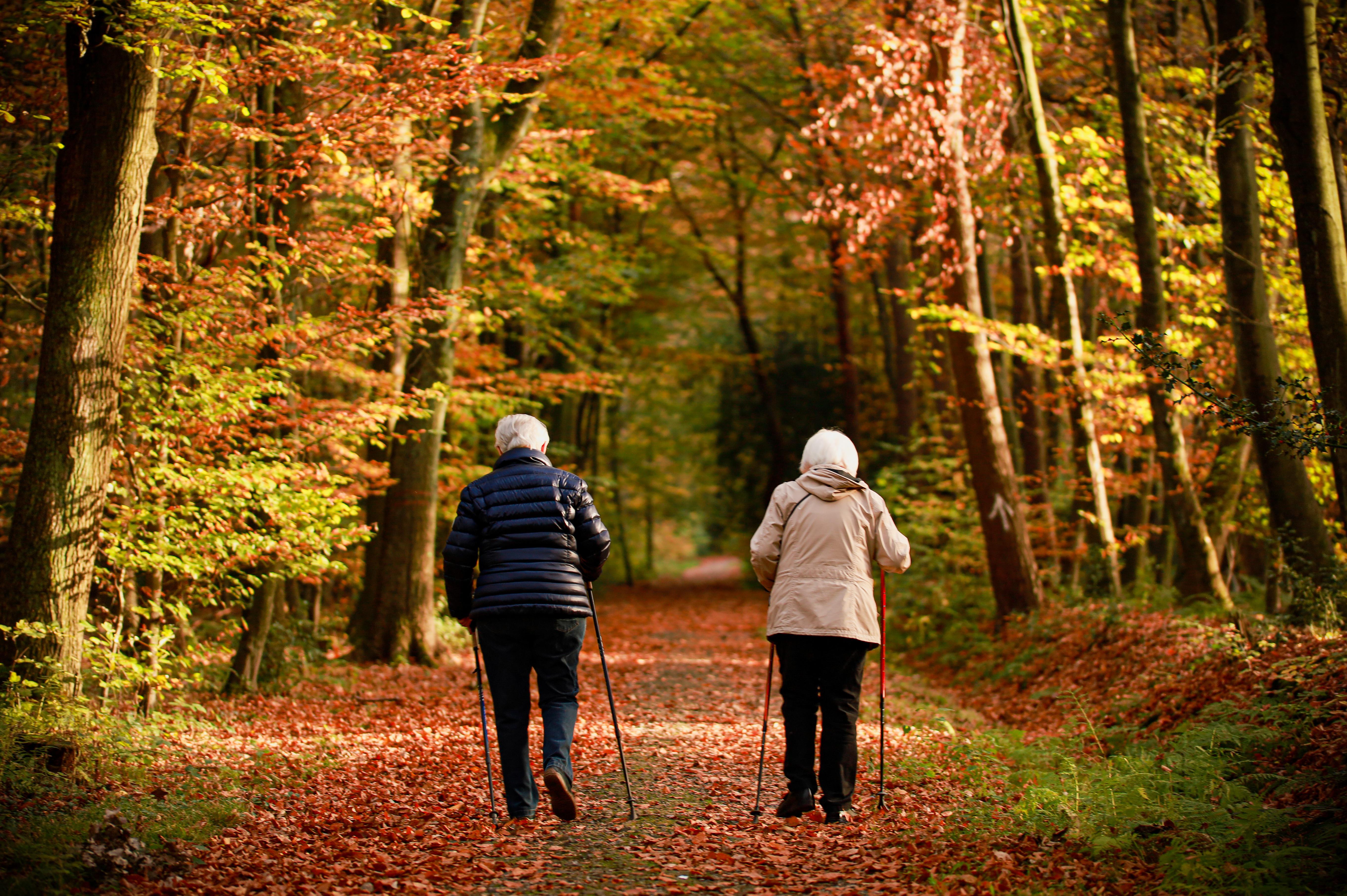


There’s a phrase from Okinawa that quietly explains why some of the longest-living people on earth stay lean, sharp, and energetic into their 90s:
Hara Hachi Bu.
It means:
Eat until you are 80% full.
That’s it. No macro calculator. No elimination diet. No detox tea.
Just discipline at the margin.
Most people eat until they’re:
Hara Hachi Bu stops you before that signal arrives.
Fullness is delayed. Your brain lags behind your stomach by about 10–20 minutes. If you stop at “I could eat more,” you usually land at comfortable satisfaction instead of excess.
It’s not restriction.
It’s restraint.
If you consistently stop at 80%:
No willpower battles later.
No shame spiral.
No “I’ll start again Monday.”
Just small, repeatable discipline.
This is where it becomes powerful.
Hara Hachi Bu trains something deeper than nutrition:
Impulse control.
The fork pauses.
You assess.
You decide.
That moment builds identity.
You become the type of person who can stop.
And that skill transfers:
It feels like:
It does not feel like deprivation.
If you feel deprived, you undershot.
Use a slightly smaller bowl or plate. Psychological framing matters.
Put the fork down between bites.
Chew fully.
Let the signal catch up.
When you think you’re getting full, pause for 2 minutes.
If you’re still hungry after, continue.
If not, you’re done.
Literally leave the last bite. Train the muscle.
Hara Hachi Bu is not:
It’s strategic under-consumption.
A quiet edge.
In places like Okinawa, calorie moderation is built into culture. Meals are vegetable-heavy, modest in portion, and eaten slowly.
Longevity researchers studying “Blue Zones” often point to this 80% rule as one of the simplest sustainable behaviors associated with extended lifespan.
No hacks.
No heroics.
Just consistency.
You talk about building your body like a Rolex — a luxury item that cannot be bought.
Hara Hachi Bu is how you protect that asset.
It’s the difference between:
You don’t need to be extreme.
You need to be slightly restrained, repeatedly.
At your next meal:
Stop one bite earlier than you want to.
Sit with it.
Notice the calm.
That calm is control.
And control compounds.
 | Don’t total yo… on Fuck Carpe Diem |
| Update: Game of Horm… on The Game of Hormones and Enzym… |
 | The Cost of Cowardli… on Courage |

