tldr:
- I implemented the running change for HDL https://cnsnnts.wordpress.com/2023/11/26/runnings-impact-on-hdl-ldl/
- I want to implement this aging thing too
- Basically, a 12% decline for me will be 1800 calories per day. That is enough. And it is achievable.
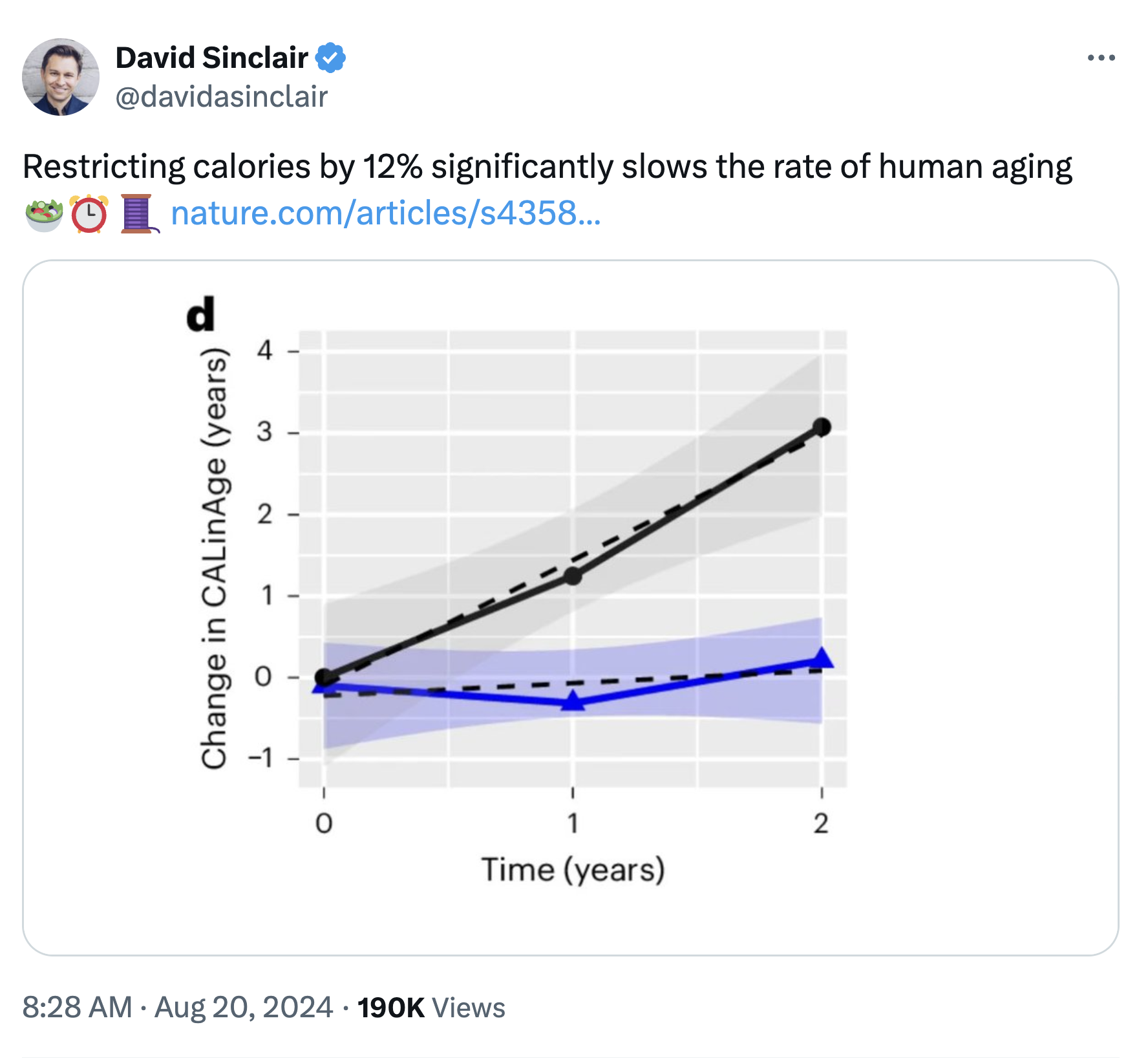
David sinclair posted this:
https://www.nature.com/articles/s43587-024-00646-8
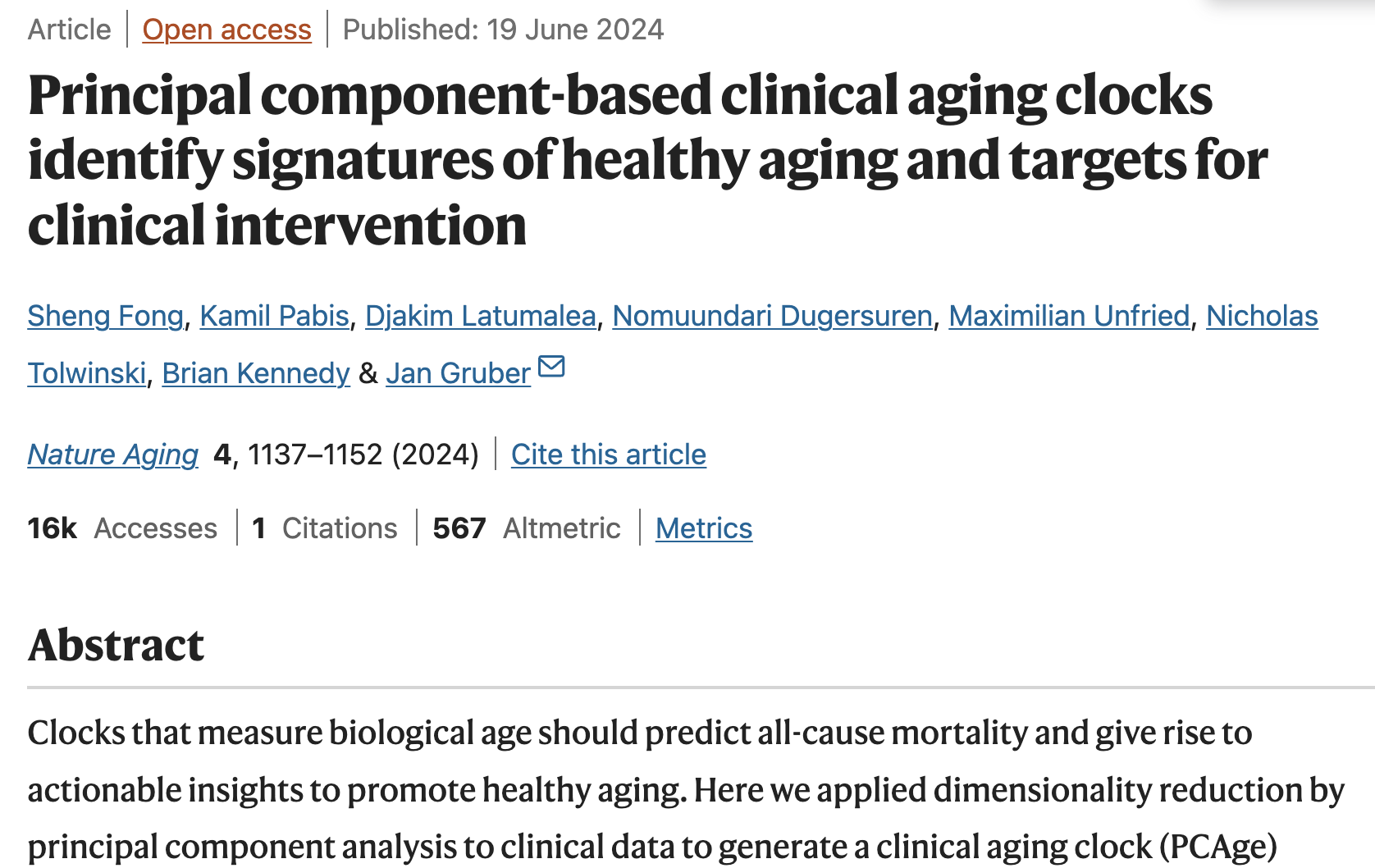
The key piece being:
Caloric-restricted subjects have lower aging rates
One important application for aging clocks is to evaluate the impact of intervention strategies on BA. The CALERIE phase 2 randomized controlled trial was designed to test the effects of moderate (25%) calorie restriction (CR). A cohort of 220 healthy non-obese volunteers between the ages of 20 years and 50 years were randomly assigned to either CR or ad libitum (AL) control groups and followed over 2 years55. Although, in practice, subjects from the CR group achieved only relatively moderate CR (12%), this nevertheless resulted in a significant reduction in several known CVD risk factors56, with reduction in BA estimates based on three different algorithms (Klemera–Doubal BA, PhenoAge and homeostatic dysregulation)28,57. However, a post hoc analysis using DNAm clocks found that only one DNAm clock (DunedinPACE) was able to identify significant effects, with no changes reported by several other DNAm clocks, including PhenoAge and GrimAge58. Unfortunately, the parameters reported for CALERIE do not overlap sufficiently with LinAge to apply it directly. However, the PCA approach can be used to re-train custom clocks based on different subsets of the feature space.
Comparison to running
Remember that I implemented this: https://cnsnnts.wordpress.com/2023/11/26/runnings-impact-on-hdl-ldl/
And I saw the results of it.

 The Rolex Life
Leave a comment